Free
$0
No credit card required
- 3 projects
- 100k events / month
- 14-day telemetry history
- 250 MB of input/output uploads / month
- 14-day captured-file retention
- Dataset creation, label review & export
For AI running on devices and in the cloud.
See where model behavior changes across releases, runtimes, and devices. Inspect captured inputs, outputs, and feedback, then turn selected examples into datasets for evaluation and training.
Input/output capture is optional · No credit card required

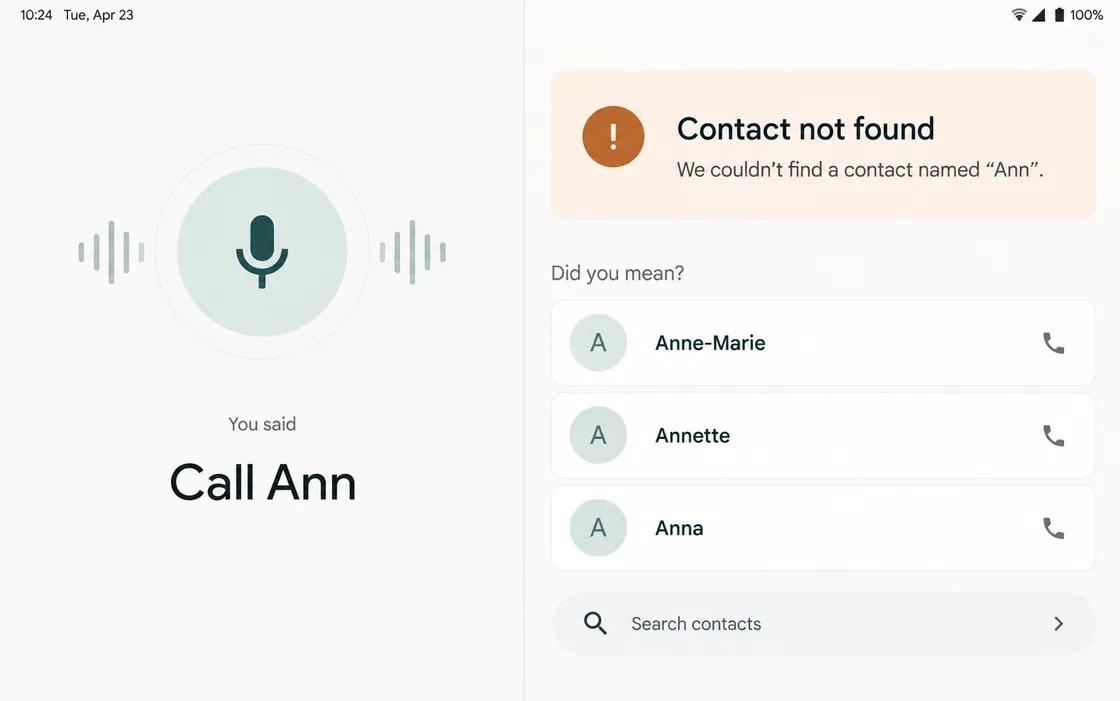
Product recognition dropped on one iPhone cohort.
Mean prediction confidence · daily7 days agomodel v4.2 rollouttoday
Confidence by class: bottle 0.38 boxed item 0.41
Users are correcting more names and numbers.
One corrected interactionCorrection rate after Android build UP1A.231005: 14%, up from 6% across 6,140 interactions.
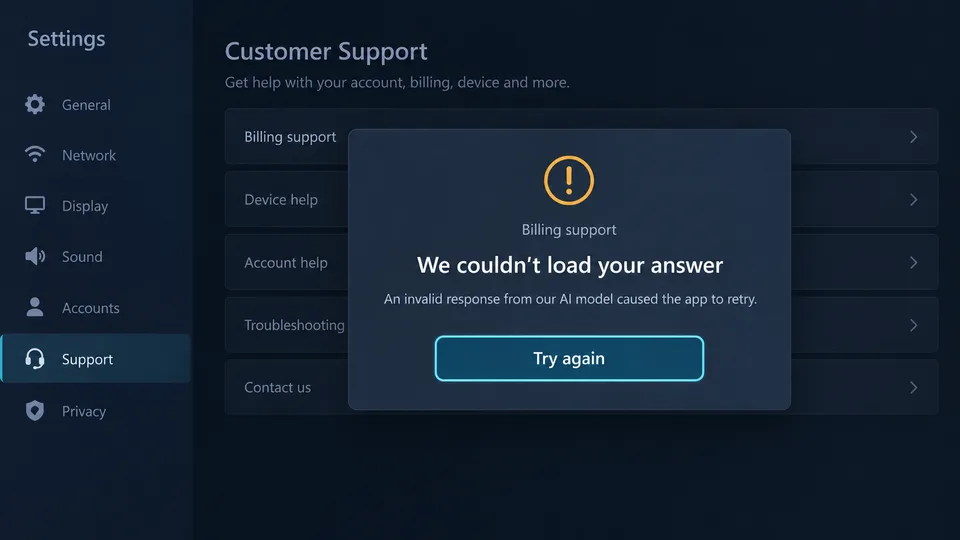
A new prompt is producing invalid fields.
Prompt v12 · small-model-v3{"priority": "urgent", "category": "billing"}
priorityExpected low | medium | highFirst-response validity: 71% for prompt v12 + small-model-v3, versus 97% for prompt v11 on the same model.
See the product
Inspect captured inputs and outputs alongside model predictions and available feedback. Filter by model, device, confidence, or outcome to find relevant examples.
View full screenshot ↗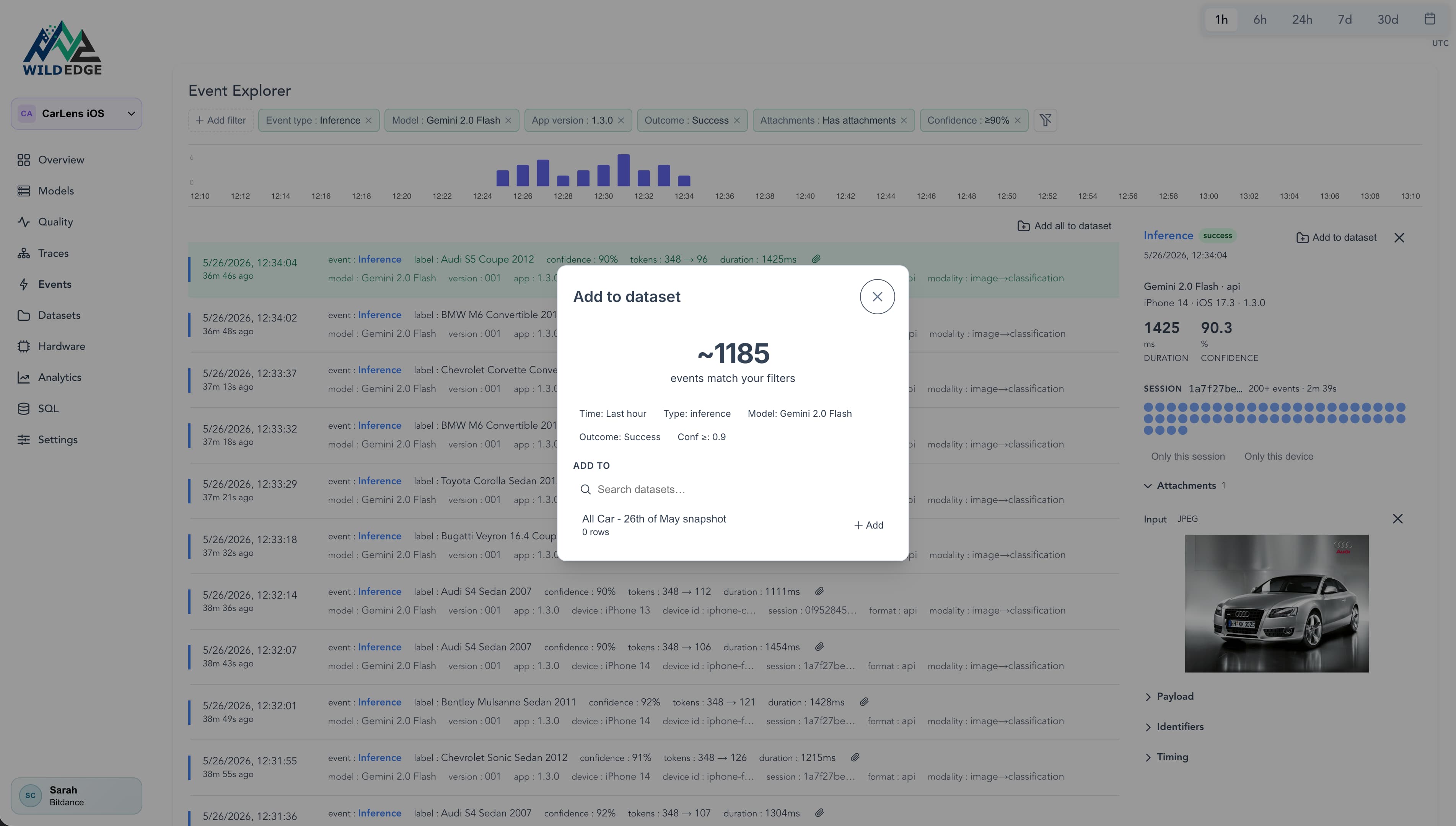
Select useful examples, review and correct their labels, and check what your dataset contains before using it for evaluation or training.
View full screenshot ↗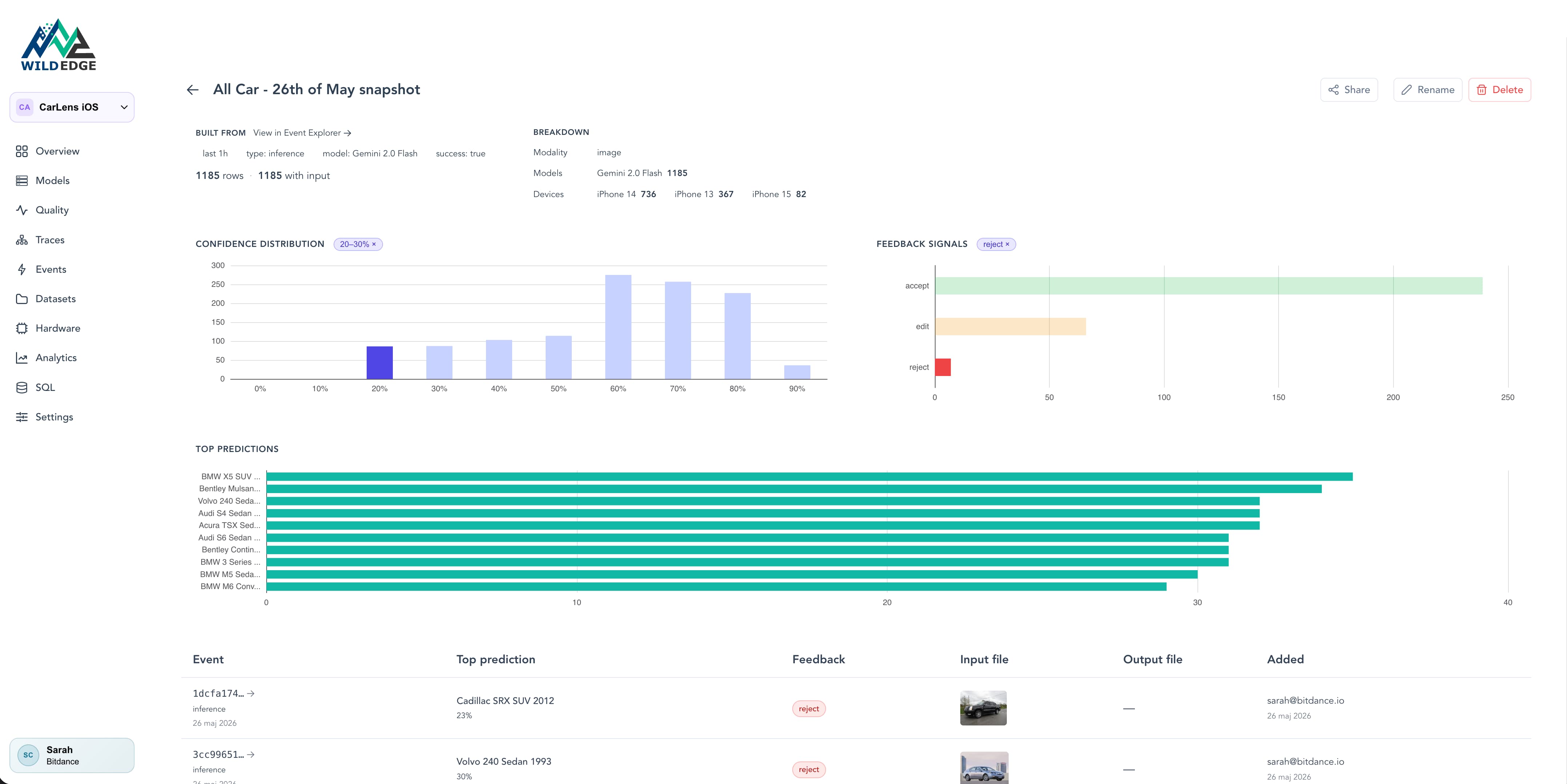
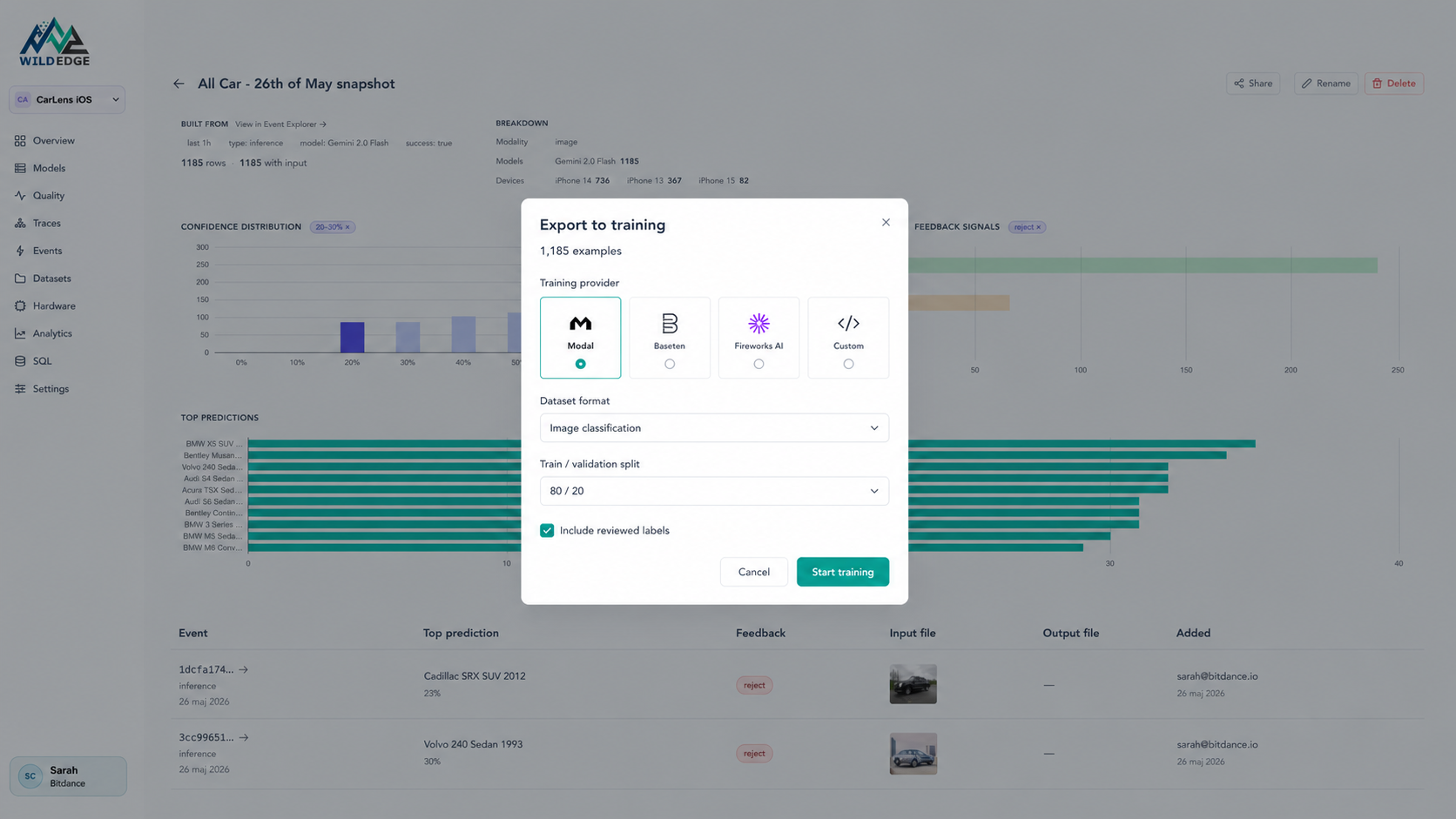
Export reviewed examples to your training tools, or use them to build a separate evaluation set.
Integrations
Add an SDK to collect inference telemetry. Enable input and output capture when you need examples for review.
uv add wildedge-sdkTransformers · PyTorch · TensorFlow · Keras · ONNX · MLX · llama.cpp · Ultralytics · timm · OpenAI · Anthropic · OpenAI-compatible APIs
implementation("dev.wildedge:wildedge-android:0.1.0")TFLite · Play Services TFLite · ONNX Runtime · ML Kit · LiteRT · LiteRT LLM · Gemini · Custom models
.package(url: "https://github.com/wild-edge/wildedge-swift.git", from: "1.1.0")Core ML · TFLite · ONNX Runtime · ML Kit · ExecuTorch · llama.cpp · OpenRouter · Gemini · Custom models
What happens on real devices
| Chipset | Execution path | p95 latency |
|---|---|---|
| Tensor G3Pixel 8, Pixel 8 Pro | 180ms | |
| Snapdragon 8 Gen 2Galaxy S23, OnePlus 11 | 210ms | |
| Tensor G2Pixel 7, Pixel 7a | 340ms | |
| Exynos 1380Galaxy A54, Galaxy M54 | 520ms |
Work with your coding agent
Give your coding agent access to WildEdge production telemetry. It can investigate affected devices, inspect traces, and connect runtime failures to your code.
Connect your coding agent Powered by WildEdge MCP› Why did inference get slower after our last release?
✓ Compared releases by chipset and execution backend
✓ Inspected affected traces in WildEdge
✓ Read the runtime initialization code
The slowdown is concentrated on Exynos 1380 devices.
| Metric | Before | After |
|---|---|---|
| p95 latency | 190 ms | 520 ms |
| CPU execution | 9% | 88% |
Affected traces record accelerator initialization errors, followed by inference on CPU.
In ModelRunner.kt, the fallback handler catches that error and switches to CPU. Users still get a result, but inference takes longer.
I’d test two hypotheses: changed accelerator settings or a runtime dependency regression. Can you reproduce on an affected device with both releases and capture the initialization error?
Evidence: release comparison · trace · ModelRunner.kt
Device to cloud
When a local model hands work to a cloud model, inspect both steps in the same trace. See where time was spent and connect the response to the recorded user outcome.
Compare WildEdge with other toolstr_01J8Y2Q41.04 s totalPrivate deployment
Run WildEdge on-premises or in your own cloud. Structured records use an open table format, with captured inputs and outputs in object storage.
Try WildEdge free. Choose a plan as your usage and deployment needs grow.
Free
No credit card required
Pro
Billed monthly
Enterprise
For private deployments and scale
Need more upload capacity? Talk to us about additional capacity ↗
Event and upload allowances are shared across your company’s projects and reset each monthly usage period. Input and output files both count toward the upload allowance. Adding a file to a dataset does not extend its retention; export files you need to keep before they expire. Training integrations require an account with the destination provider.